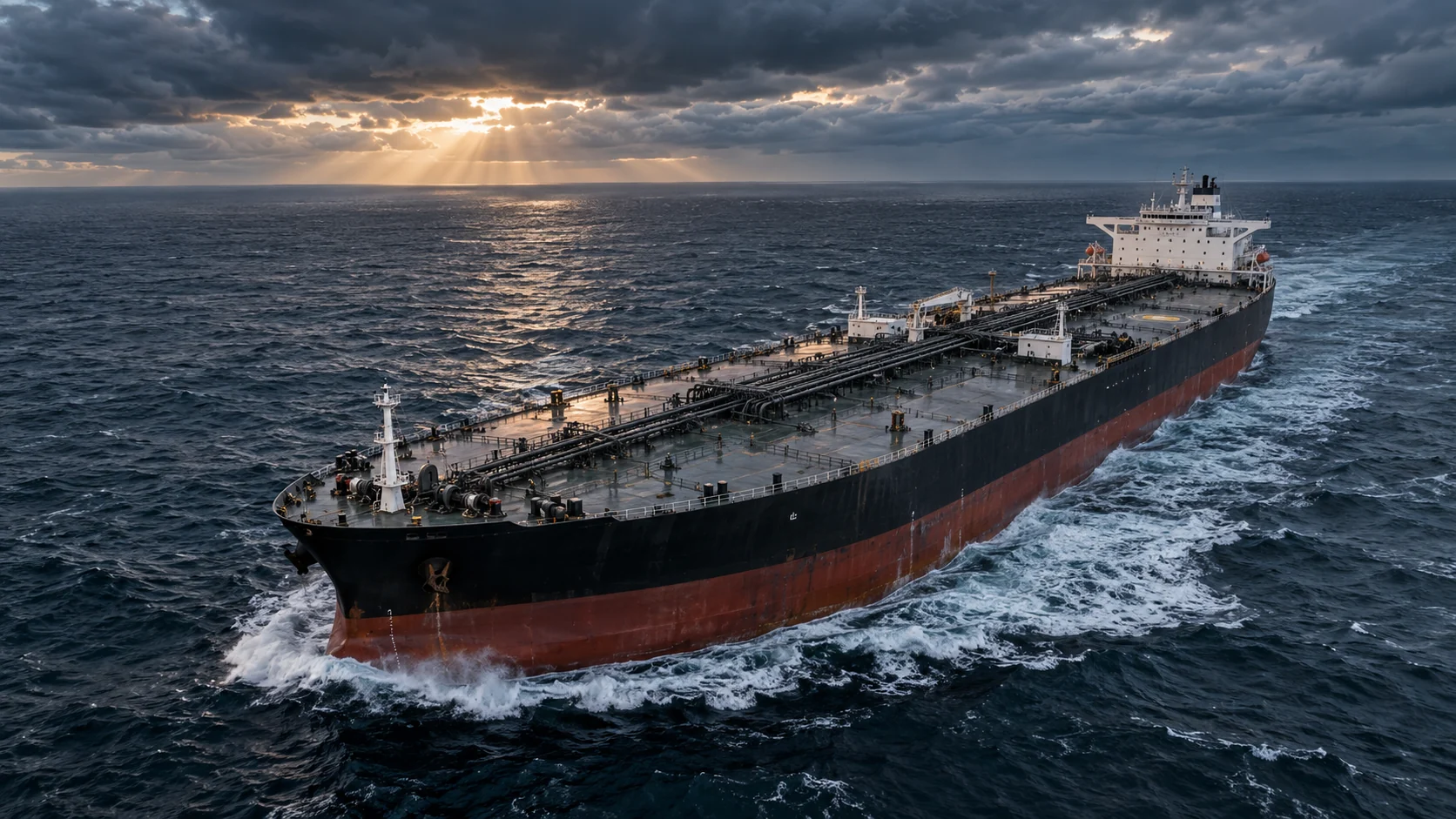
Keep the tracker’s period and incident standard attached to the number. Tanker-market stress is not a quoted container surcharge.
Security incidents, vessel damage and tanker-market pricing are different observations. A useful freight decision starts by identifying which of those channels actually touches a shipment or contract.
What happened?
Reuters reported October 23 that a Washington Institute tracker recorded 28 confirmed and reported attacks around the Strait of Hormuz and nearby waters during October through the October 23 report cutoff. The tally was the highest monthly figure in that tracker’s record, which began in 2017. It should not be described as 28 independently confirmed attacks or an all-time global record.
Reuters’s separate review of International Maritime Organization records identified more than 30 damaged very large crude carriers since the conflict began—roughly 3.5% of the global VLCC fleet. The report also described tanker freight rates exceeding $1 million per day on some movements.
Those figures have different scopes: a monthly incident tally, cumulative vessel damage, and selected tanker-market pricing. They cannot be combined into a single percentage increase in container shipping costs. Nor does a damaged-vessel count establish how long each ship is unavailable.
Source checked 24 October 2026: Reuters reporting retrieved through EnergyNow syndication. Incident-tracker and IMO-record findings are attributed to Reuters; those underlying datasets were not independently retrieved. Keep the October 23 reporting cutoff, confirmed-and-reported standard, VLCC scope and selected tanker-pricing basis attached to the figures. No live feed or container-rate forecast.
Who is exposed?
Energy logistics teams, charterers and shippers with region-dependent supply should seek shipment-specific operational evidence. Other readers may have indirect fuel or supplier exposure, but that link needs their own contract and route information. A damaged-vessel count does not reveal repair duration, available replacement capacity or the terms borne by a particular cargo owner.
Map the exposure before estimating the cost
For a shipper, the first question is whether a consignment, supplier or fuel arrangement depends on the affected region. Build that map at the lane and shipment level. An energy-market headline can be commercially important even when a particular container booking is outside the area, but the mechanism needs to be identified.
Separate the potential channels: routing and transit time, availability of suitable capacity, insurance conditions, and fuel-linked charges. Ask a forwarder or carrier for the actual applicable notice or quote. A scenario should not replace a documented change in terms.
What could this mean for my costs?
Record the cost owner, period and contract basis before adding a delay assumption. This arithmetic does not convert a security incident tally into a probability, a vessel availability forecast or a rate increase.
A useful dashboard needs an evidence ladder
Show security reports with dates and distinguish confirmed incidents from reported ones. Next to them, display shipment-specific operational notices and dated commercial offers. Leave unavailable fields blank rather than filling gaps with an inferred live rate.
For an internal stress test, let the reader supply a hypothetical delay and daily carrying cost. Multiplying those inputs can illustrate inventory exposure without claiming to forecast an attack, a reopening date or a freight rate. Keep any resulting estimate visibly separate from observed market data.
What changes the decision
A confirmed rerouting, revised insurance requirement or valid replacement quote can justify operational action. A broad headline alone is less specific. Keep alternatives ready, but compare their total cost and service consequences before shifting freight.
This report does not establish a new parcel fee or a universal trucking-rate increase. Any later pass-through should be documented using the relevant carrier’s terms and effective dates, rather than attributed automatically to one day’s maritime reporting.
A transparent cost sensitivity
| Hypothetical delay | Entered incremental cost | Per metric tonne |
|---|---|---|
| 1 assumed extra day | $15,000 | $0.75 / tonne |
| 3 assumed extra days | $45,000 | $2.25 / tonne |
| 7 assumed extra days | $105,000 | $5.25 / tonne |
Illustrative shipment inputs and conditional eligibility only. Not a live quote, universal invoice adjustment, tax determination or forecast.
Model a specific cost channel, not the whole headline. Your local shipping profile can supply compatible inputs. It does not prove the event affects your operation, and it never changes the source facts. Incompatible modes keep separate examples.
What should I watch?
- Verified operational notices
- Vessel availability and routing
- Applicable insurance and surcharge terms
Bring these questions to your next review.
- Obtain dated operational notices for your actual route and cargo.
- Verify replacement capacity and the applicable insurance or contractual terms.
- Keep security reports, commercial offers and hypothetical delays in separate records.
Keep the tracker’s period and incident standard attached to the number. Tanker-market stress is not a quoted container surcharge. Keep reported observations, your own contract evidence and hypothetical inputs separate.
What changed in this coverage?
Source checked: 24 Oct 2026. This is a recorded research snapshot, not continuous monitoring. Reporting, editorial updates and hypothetical assumptions are distinct.
- SOURCE PUBLICATION
Latest cited source date; observation periods and source-specific effective dates are stated in the article.
- SOURCE CHECK / SCS ANALYSIS
Added source-checked reporting, original operating context and a separate cost sensitivity. No event-linked price forecast or automated publication receipt is claimed.
Source-deployed article in this reader collection. This record is not a D1 editorial approval or an automated daily intake receipt. Later owner-released corrections or retractions take precedence at this URL.
FOLLOW THE CONNECTED COVERAGE ↗Sources & provenance.
- Reuters via EnergyNow: Ship attacks in Strait of Hormuz hit record high in October ↗2026-10-23 · source checked 24 October 2026 · Dated source evidence. See the article for the scope of the claim; this is not a live rate feed.
Article update. Initial source-checked article for the 24 October 2026 Pacific edition. Original operating analysis and hypothetical arithmetic are separated from dated reporting.
Research edition: 24 Oct 2026 Pacific. First published: 24 Oct 2026. Last modified: 24 Oct 2026. Source periods and access limits appear above. Research-checked and source-deployed at the owner’s request. A separate human editorial review has not been recorded. This is not an automated publishing or D1 approval receipt. Reported figures are attributed to the source, not independently audited. External links open the original source; availability may vary.