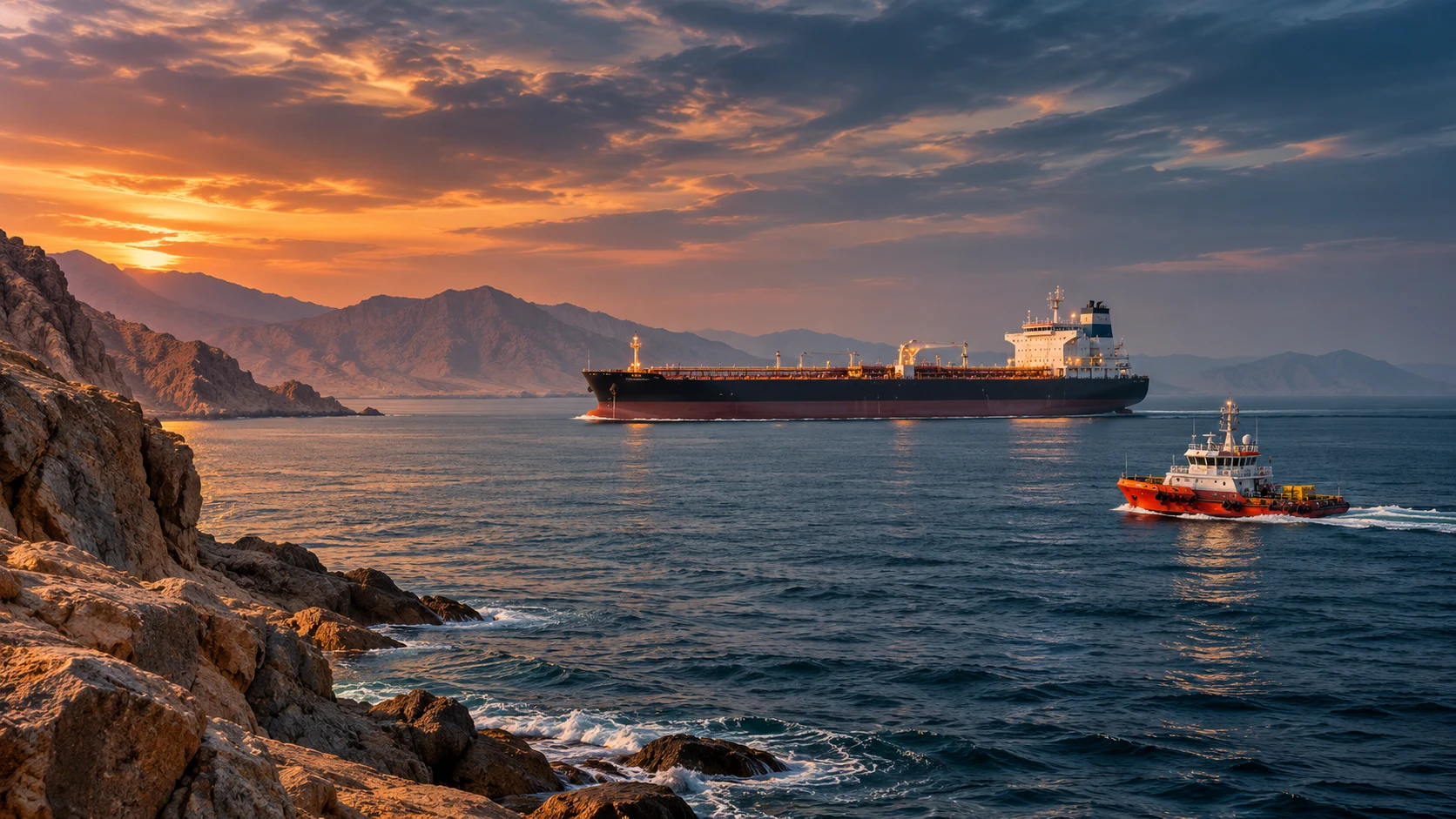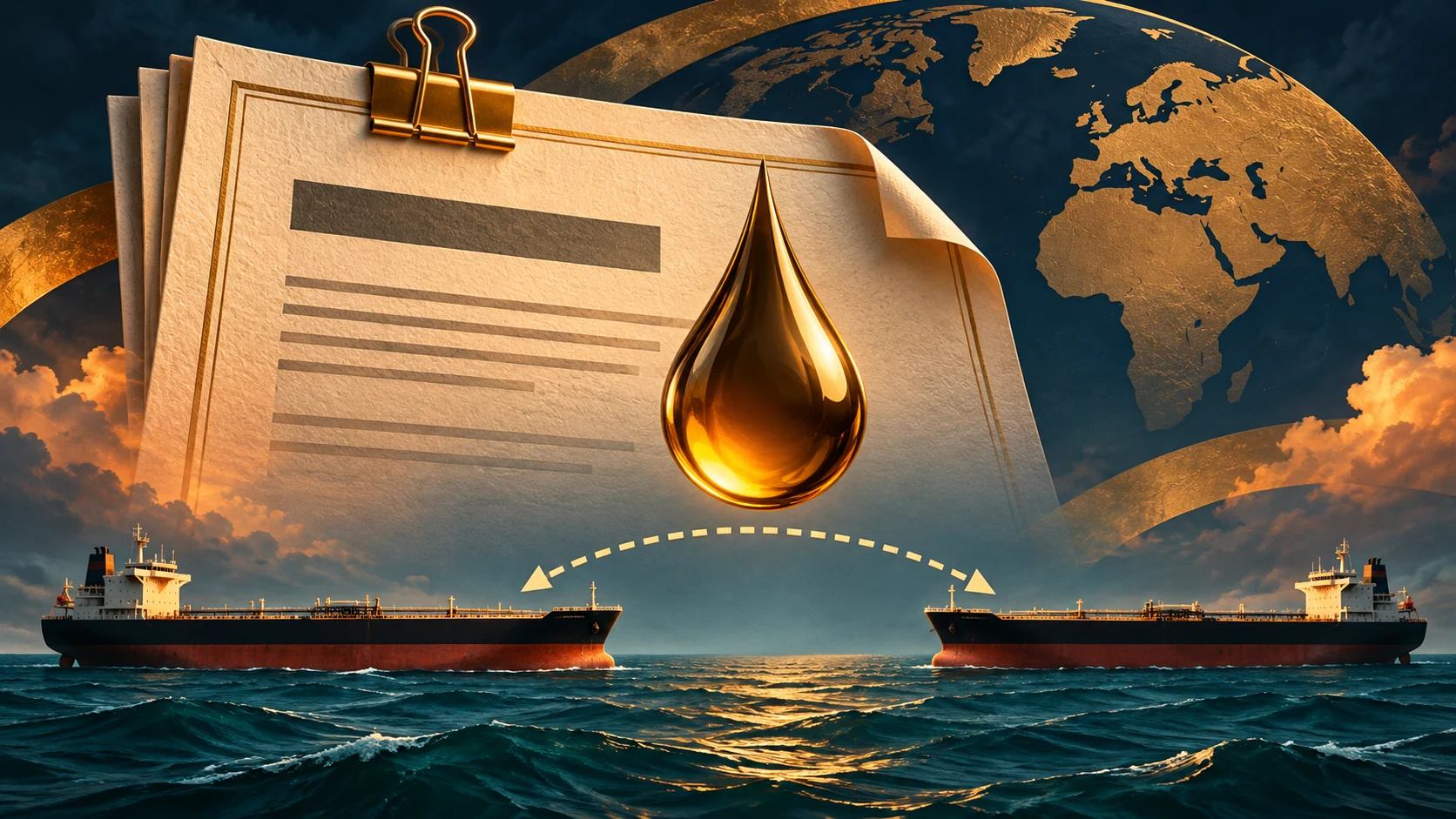
Were two supertankers disabled in the Strait of Hormuz?
Iran's Revolutionary Guards Navy says two supertankers were disabled by explosions, but the vessels' identities, damage and cause have not been independently established in the reporting reviewed for this November 12 update. Shippers should treat this as a developing security claim and request voyage-specific information before assuming a new surcharge, a confirmed mine strike or a closure of the waterway.
What did Iran say, and what remains unconfirmed?
Reuters reported on November 12 ↗ that the IRGC Navy said the explosions occurred Wednesday night after the ships used a route it described as unauthorized. Iranian state media subsequently attributed the incidents to naval mines. Reuters' syndicated report ↗ preserves that attribution.
The sources reviewed here do not independently establish these two incidents. Repetition of the same Iranian claim across publications should not be mistaken for multiple independent observations of the same vessels.
The current evidence does not establish ship names or IMO numbers, cargo volumes, crew casualties, pollution, the extent of physical damage or salvage requirements. “Unauthorized” describes Iran's characterization of the route; it does not independently establish the legal status of a transit. Earlier attacks or explosions in the region cannot verify these two alleged incidents.
How could this affect tanker freight and fuel costs?
The immediate commercial issue is whether a particular voyage can proceed on its agreed terms. An owner, charterer or insurer may reassess the risk before a casualty has been conclusively identified. That assessment needs current security advice and the vessel's circumstances, not just a headline.
Potential costs include additional insurance, security measures, waiting time, alternative loading arrangements and missed delivery windows. None should be described as a new market-wide charge caused by this report without evidence. A tanker insurance quote is also not a container surcharge, and an oil-price change does not instantly determine the diesel surcharge on an inland truck shipment.
How should a shipper test insurance exposure?
Use separately labeled scenarios rather than a single unsupported estimate. For illustration, an additional premium of 0.1% on an insured vessel value of $100 million would equal $100,000. Those figures are arithmetic assumptions, not a current quote or a verified increase. The party responsible for the bill depends on the insurance arrangements and charter terms.
For fuel-dependent trucking, distribution and air cargo, ask when the relevant surcharge index is observed and when it resets. Exposure depends on the purchased service, contract formula and timing. This article does not establish a new fuel surcharge for any mode.
Which charter and cargo terms deserve review?
BIMCO's Gulf war-risk guidance ↗ recommends assessing each charter on its own wording. War-risk clauses can address refusal to proceed, alternative orders, deviation and allocation of delay or extra costs. Procedural requirements and the objective risk assessment matter.
Do not assume that force majeure follows automatically from a report of increased danger. BIMCO distinguishes its force-majeure clause from general commercial inconvenience: the contractual test, notice rules and mitigation duties still apply. Owners and charterers should use their advisers to evaluate the actual agreement.
For charters incorporating VOYWAR 2025 ↗, BIMCO's explanation highlights transparency around insurance costs and reasonable efforts to obtain appropriate cover and terms. Check the incorporated version and amendments before assuming a particular reimbursement obligation.
Cargo owners should also identify who can issue voyage instructions, who receives delay notices and which buyer or receiving facility needs a revised arrival estimate. Prepare those contacts before an operational change forces a rushed decision.
What should shippers verify before changing a voyage?
Ask the operator for the vessel's current position, latest voyage plan and the security assessment applicable to that transit. Request any revised premium or charge in writing, with its scope, validity period and contractual basis. Avoid treating a regional rumor as permission to direct a vessel into danger or to cancel a contract without review.
Watch for identifiable operator statements and official incident notices. UKMTO's incident channel ↗ is an appropriate verification source, but the text feed available during this review did not provide a usable matching notice. That access limitation is not proof that no incident happened.
The next useful update is independently attributable evidence identifying the vessels and describing the event. Until then, preserve the distinction between a reported claim, an operational risk assessment and an actual invoice.
Frequently asked questions
Have naval mines been confirmed as the cause?
No. That explanation is attributed to Iranian state media and has not been independently verified in the sources reviewed.
Is the Strait of Hormuz closed because of these claims?
This reporting does not establish a new closure. Transit decisions require current official and operator guidance.
Are new freight surcharges confirmed?
No new surcharge attributable to these alleged incidents was verified. Request route-specific written terms from the carrier or owner.
What information would materially strengthen the report?
Vessel identities, an operator or maritime-authority account, independently verified damage and reliable evidence of the cause would help establish what happened.
Original November 12 article with Protocol 01 freight-cost, contract and next-decision framing. Owner authorized publication. A separate human factual review is not recorded.
Sources & publication notes
Reuters indexed timestamp and syndicated text verified. Claims attributed to IRGC/state media; No independent confirmation of the two current claims was retrieved. No independent vessel identities, damage, mine cause or new surcharge established. UKMTO page extraction unusable for matching incident; absence of retrieved notice is not disproof. Prior maritime incidents are not verification of these two claims.
- Reuters: Two oil tankers disabled by explosions, IRGC says ↗12 November 2026, 08:05:16 UTC · Indexed Reuters report; direct-page open failed. Iranian claim, not independent casualty verification.
- Oman Observer: Reuters report on two oil tankers ↗12 November 2026, 12:22 PM displayed; timezone unstated · Reuters syndication text corroborates attribution of explosions to IRGC and mine explanation to Iranian state media; not an independent second confirmation.
- BIMCO: Remember the War Risks Clauses ↗3 March 2026; opened 12 November 2026 · Primary contractual guidance read directly. Each agreement and notice process matters; increased risk does not automatically satisfy force majeure.
- BIMCO: War Risks Clause for Voyage Charter Parties 2025 ↗2025 clause; checked 12 November 2026 · Indexed primary clause commentary supports transparency and reasonable efforts concerning insurance cost. No advice on a specific charter.
- UKMTO: Recent Incidents ↗Opened 12 November 2026 · Tool text rendered zero reports without usable incident detail. This is an access limitation, not evidence that no incident happened.
SCS publication: 12 Nov 2026 · 13:19 UTC. Last modified: 12 Nov 2026. Research cutoff: 12 November 2026, 12:43 UTC; research snapshot, not a live feed; not the publication time. Source dates are distinct from publication. Reported figures remain attributed, not independently audited. External source availability may vary.
Prepared with AI-assisted research and analysis. The site owner authorized publication of this November 12 article. A separate human factual review is not recorded. Reported figures remain attributed to their sources.
Use your own evidence.
Earlier Hormuz tanker fire and UAE rescue reporting ↗ — Different incident; background only, not verification of the two current claims.
Earlier damaged-tanker cargo transfer reporting ↗ — Distinct Gem No.2 cargo transfer story; avoid confusing vessel identity or chronology.
Tools remain separate from the reporting. No headline becomes a live quote, a guaranteed saving or an automatic surcharge.