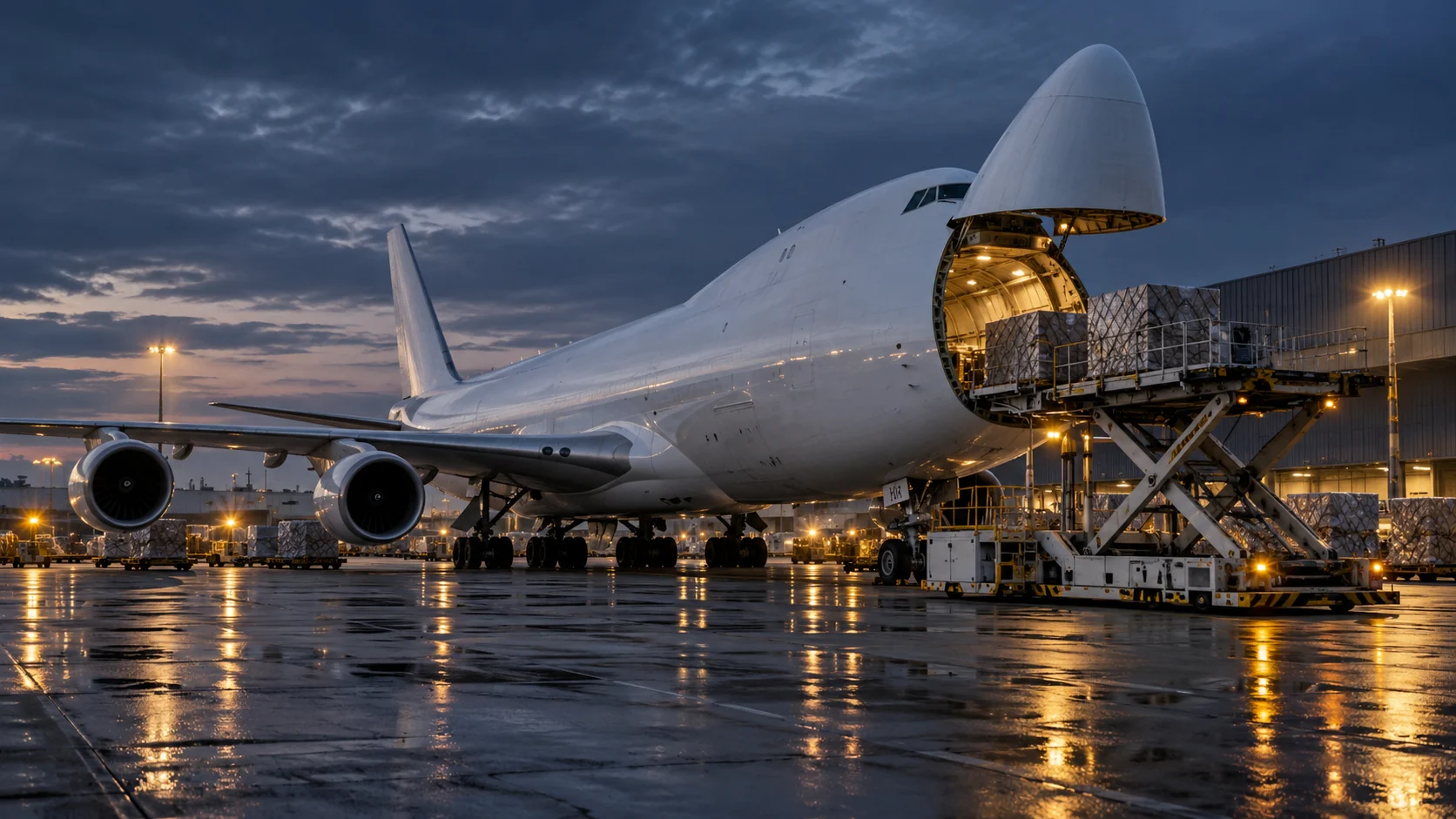
The opportunity is another operating option. Prove its value with a real booking and an end-to-end comparison.
Western Sydney’s October 25 passenger opening follows freight operations that began in July. Around-the-clock access offers flexibility, not guaranteed lower cargo rates.
What happened?
Western Sydney International Airport opened to passengers on October 25, 2026, according to Reuters and ABC reporting. This is not its first cargo-service day: the Australian government’s July 27 release said the airport was already operational for freight.
Reuters reports a project cost of A$5.6 billion and describes the airport as a 24-hour operation. Its approximately US$3.94 billion equivalent is a conversion in that October 25 report, not a separate project budget or a continuously updated currency figure.
Sources checked October 25, 2026. Reporting is distinguished from operational analysis; no new freight-rate effect established.
Who is exposed?
Shippers with bookings on the affected route should verify their own carrier, handling and ground-transport arrangements.
The new milestone is passenger service, not the arrival of freight from zero.
For supply-chain planning, the distinction matters. A passenger flight may create an additional cargo option, but the existence of a seat schedule does not prove space is sold for a particular commodity or direction. Aircraft type, payload restrictions, handling arrangements and the airline’s commercial offering all need checking.
Treat a newly available departure as a candidate service. Ask the carrier or forwarder about accepted dimensions, booking lead time, handling requirements and onward connections. The useful comparison is the shipment’s actual route, not an airport’s theoretical long-term capacity.
A 24-hour airport can change the clock without changing every price.
Our analysis: more scheduling flexibility can help a shipper align factory collection, warehouse receiving and airline cutoff times. Whether it helps this shipment depends on when the relevant flight operates and whether the ground chain is available. Around-the-clock airport permission is not a promise of around-the-clock service from every warehouse or trucker.
Compare total elapsed time from pickup to consignee receipt. Include collection distance, terminal handling and the final delivery window. A convenient flight can lose its advantage if goods arrive when the receiving warehouse is closed. Conversely, an overnight movement may be useful even when its freight quotation is not the cheapest.
When did Western Sydney Airport begin cargo operations?
Freight operations began in July 2026; the government’s July 27 release described the airport as operational for freight. October 25 is the passenger-service milestone.
Will the opening make airfreight cheaper?
No immediate reduction is established by the cited sources. Compare actual quotations and end-to-end service for the relevant lane.
What could this mean for my costs?
An airport milestone does not establish usable capacity for a particular shipment. The calculator examines fictional bookable tonnes; real prices and acceptance need separate confirmation.
Compare the shipment, not the construction budget.
A project’s construction cost is not a rate input for a shipper. For a fictional booking, suppose airport-to-airport transport is $4,000, pickup is $300 and destination handling plus delivery is $700. The entered end-to-end total is $5,000. Another routing should be compared against those same cost categories and the same shipment deadline; an omitted truck leg can reverse the apparent saving.
The separate capacity model uses invented bookable tonnes, not an airport design forecast. Even if the assumed space exceeds demand, the product may still be ineligible, the quoted departure may be full, or the receiving operation may be closed. Keep those service constraints next to any cost estimate rather than converting an opening announcement into a claim of guaranteed availability.
Does the entered shipment plan fit?
| Assumed capacity cut | Bookable space | Demand / available |
|---|---|---|
| 0% | 100 tonnes | 80.0% |
| 20% | 80 tonnes | 100.0% |
| 40% | 60 tonnes | 133.3% |
Values above 100% indicate a shortfall in the entered scenario, not a predicted rate increase. Commodity acceptance, chargeable weight, handling and actual bookings remain separate.
First qualify the service. Then price it. Your local shipping profile can supply compatible inputs. It does not prove the event affects your operation, and it never changes the source facts. Incompatible modes keep separate examples.
What should I watch?
- Published airline cargo schedules and accepted commodities.
- Handling capacity and ground-transport availability for each booked movement.
- Comparable, dated freight quotations rather than assumed savings.
Bring these questions to your next review.
- Check whether the airline accepts the specific cargo.
- Compare pickup-to-delivery timing across airport options.
- Record original currency and quotation date for all cost comparisons.
The opportunity is another operating option. Prove its value with a real booking and an end-to-end comparison.
What changed in this coverage?
Source checked: 25 Oct 2026. This is a recorded research snapshot, not continuous monitoring. Reporting, editorial updates and hypothetical assumptions are distinct.
- SCS RESEARCH / ORIGINAL ANALYSIS
Added dated reporting and operating analysis, with service acceptance and hypothetical inputs kept separate from an airport announcement.
Source-deployed article in this reader collection. This record is not a D1 editorial approval or an automated daily intake receipt. Later owner-released corrections or retractions take precedence at this URL.
FOLLOW THE CONNECTED COVERAGE ↗Sources & provenance.
- Australian government: Freight takes flight in Western Sydney ↗27 July 2026 · Official freight-opening announcement and October25 passenger schedule.
- Reuters: Sydney’s new international airport opens to passengers ↗25 October 2026 dateline; syndication displays Oct24 US-time publication · Project budget, dated currency equivalent, 24-hour operation and passenger-opening milestone.
- ABC: first commercial passenger flights at Western Sydney ↗25 October 2026 · Same-day reporting of passenger opening; cargo had already begun in July.
Article update. Original October 25 analysis; reported facts, unresolved claims and hypothetical examples are distinguished.
Research edition: 25 Oct 2026 Pacific. First published: 25 Oct 2026. Last modified: 25 Oct 2026. Source periods and access limits appear above. Research-checked and source-deployed at the owner’s request. A separate human editorial review has not been recorded. This is not an automated publishing or D1 approval receipt. Reported figures are attributed to the source, not independently audited. External links open the original source; availability may vary.