Direct answer
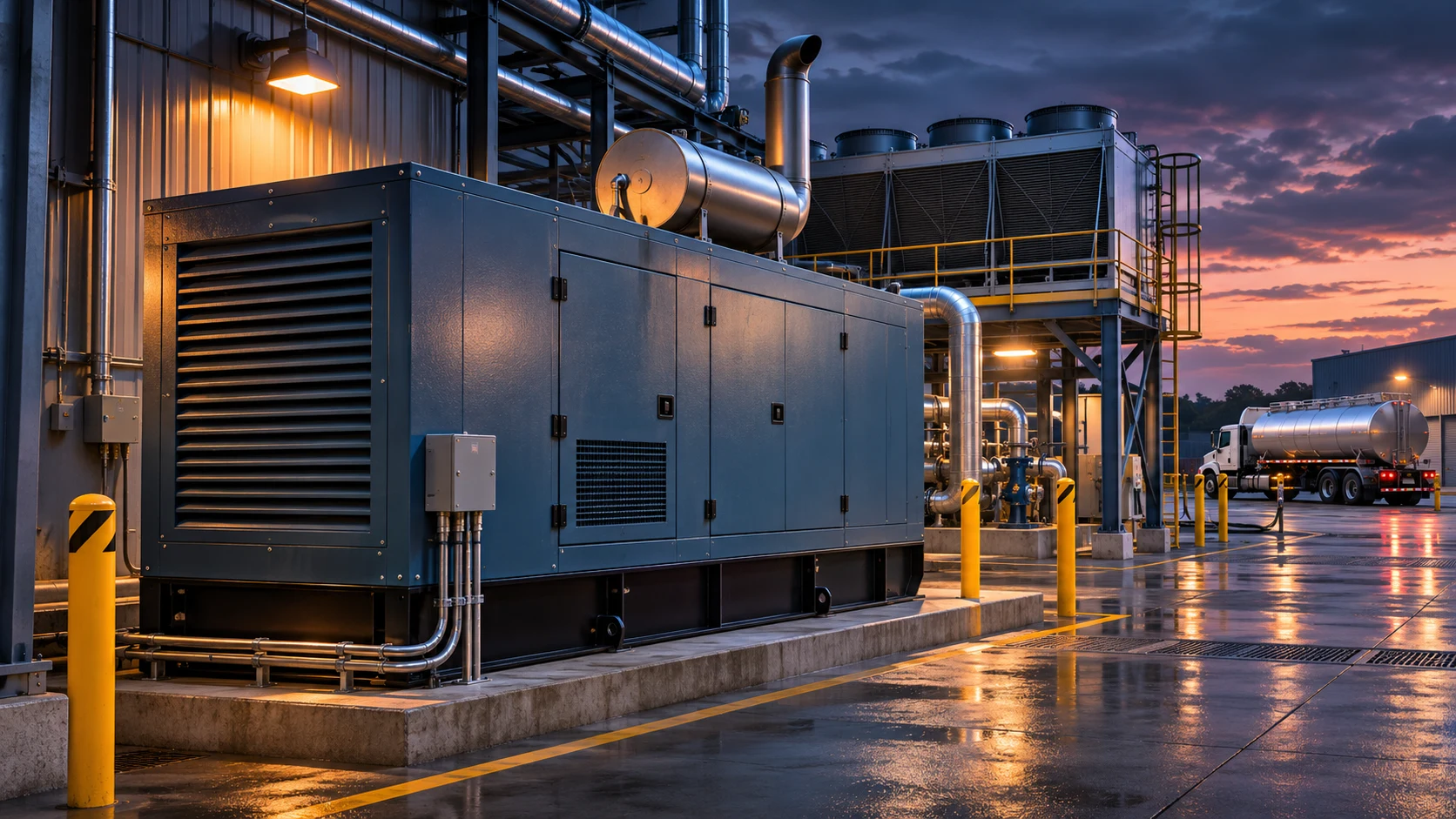
Infrastructure supply teams should focus on confirmed fuel availability and authorized delivery access after Zaporizhzhia lost its remaining external power connection on November 8. Reuters reported IAEA guidance of roughly two weeks of fuel for a limited number of emergency diesel generators. That is a conditional endurance estimate, not a delivery deadline or proof of a regional diesel shortage.
What is known about the loss of external power?
Reuters reported that the plant was using backup generators after losing its last external electricity connection. The IAEA said the location and cause of the disconnection were not yet known. Russian-installed management reported normal radiation levels; that statement should retain its attribution rather than be presented as an independently measured SCS finding.
The plant is not producing electricity, but it still needs power for cooling and safety functions. The reported fuel estimate applies to a limited number of emergency generators. It does not describe unrestricted plant operation or establish exactly when a new fuel delivery will be required.
What is the practical fuel-logistics exposure?
SCS analysis: backup resilience depends on usable fuel, consumption under the actual operating plan, equipment availability and safe access for approved deliveries. A nominal stock figure alone does not demonstrate that the next replenishment can reach the site. These operating details belong to authorized facility teams and cannot be inferred from a news report.
This event does not establish a broader diesel shortage, general trucking-rate increase or new freight surcharge. The relevant commercial question is whether an actual supply obligation needs additional coordination, a revised delivery window or a verified contingency. Avoid turning a facility-specific safety issue into a marketwide fuel-price claim.
Which supply-service terms should authorized teams verify?
For organizations with a real, approved supply role, check the agreed fuel specification, delivery responsibility, acceptance procedure and contact escalation. Confirm that any proposed change follows the facility’s authorized safety and security processes. This article is commercial planning context, not nuclear-operating or emergency-response guidance.
Review the contract’s provisions for changed access, delayed delivery, alternative approved supply and notice requirements. The sources do not establish that those provisions have changed or that any supplier has failed to perform. Document confirmed constraints before attributing responsibility or accepting additional charges.
What evidence should trigger a planning change?
Rely on updated IAEA statements and instructions from the authorized operator and relevant authorities. A verified restoration of external power, revised fuel assessment or confirmed delivery constraint would change the planning picture. Do not calculate an exact exhaustion date by counting forward from a conditional public estimate.
For shippers without a direct supply obligation, there is no demonstrated need to reprice ordinary freight because of this report. Continue checking the actual fuel index and carrier terms used by the business. Keep safety developments, supply arrangements and market-price evidence in separate records so one does not substitute for another.
Three checks before your next decision
- Treat generator endurance as conditional, not a fixed replenishment deadline.
- Use authorized operational updates to verify actual fuel and delivery requirements.
- Keep facility-specific contingency costs separate from general freight-rate assumptions.
Frequently asked questions
Does two weeks mean normal plant operation for two weeks?
No. The reported estimate concerns a limited number of emergency diesel generators.
Was the cause of the power loss established?
The IAEA said the cause and location of the disconnection were not yet known in the reviewed report.
Does this prove that diesel freight prices will rise?
No. The reports establish a facility backup-power issue, not a marketwide diesel shortage or freight-rate increase.
Initial SCS coverage applying Protocol 01: Impact. Reported facts, conditional cost exposure and SCS operating analysis are distinguished.
Sources & publication notes
Sources checked November 8, 2026. Official statements and reported estimates remain attributed. Links and source-specific access limits are recorded below. SCS recommendations are analysis, not verified changes to prices, contracts or shipment status.
- Reuters via MarketScreener: Zaporizhzhia relies on generators again ↗November 8, 2026 · Full syndicated Reuters report read. IAEA fuel estimate is conditional; normal radiation is attributed to Russian-installed management.
- Ukrinform: Zaporizhzhia loses external power supply ↗November 8, 2026 · Separate reporting citing Energoatom on the outage and remaining external line; not independent verification of every Reuters detail.
- IAEA statement reproduced within ARN Reuters report ↗November 8, 2026 · Same Reuters report with IAEA embed. Direct official X retrieval unavailable; syndication is not a separate independent confirmation.
SCS publication: 08 Nov 2026 · 12:47 UTC. Last modified: 08 Nov 2026. Research cutoff: 8 November 2026, 12:47 UTC / 4:47 a.m. PST; developing reports may change; not the publication time. Source dates are distinct from publication. Reported figures remain attributed, not independently audited. External source availability may vary.
Prepared with AI-assisted research and analysis at the site owner’s request. A separate human editorial review is not recorded. Reported figures remain attributed to their sources.
Use your own evidence.
Related freight planning: DTEK power outages: Ukraine supply-chain continuity checks ↗ — Compare the planning question while keeping events, dates and evidence separate.
Compare complete shipment costs ↗ — Use your own written quotes, service requirements and documented assumptions.
Tools remain separate from the reporting. No headline becomes a live quote, a guaranteed saving or an automatic surcharge.