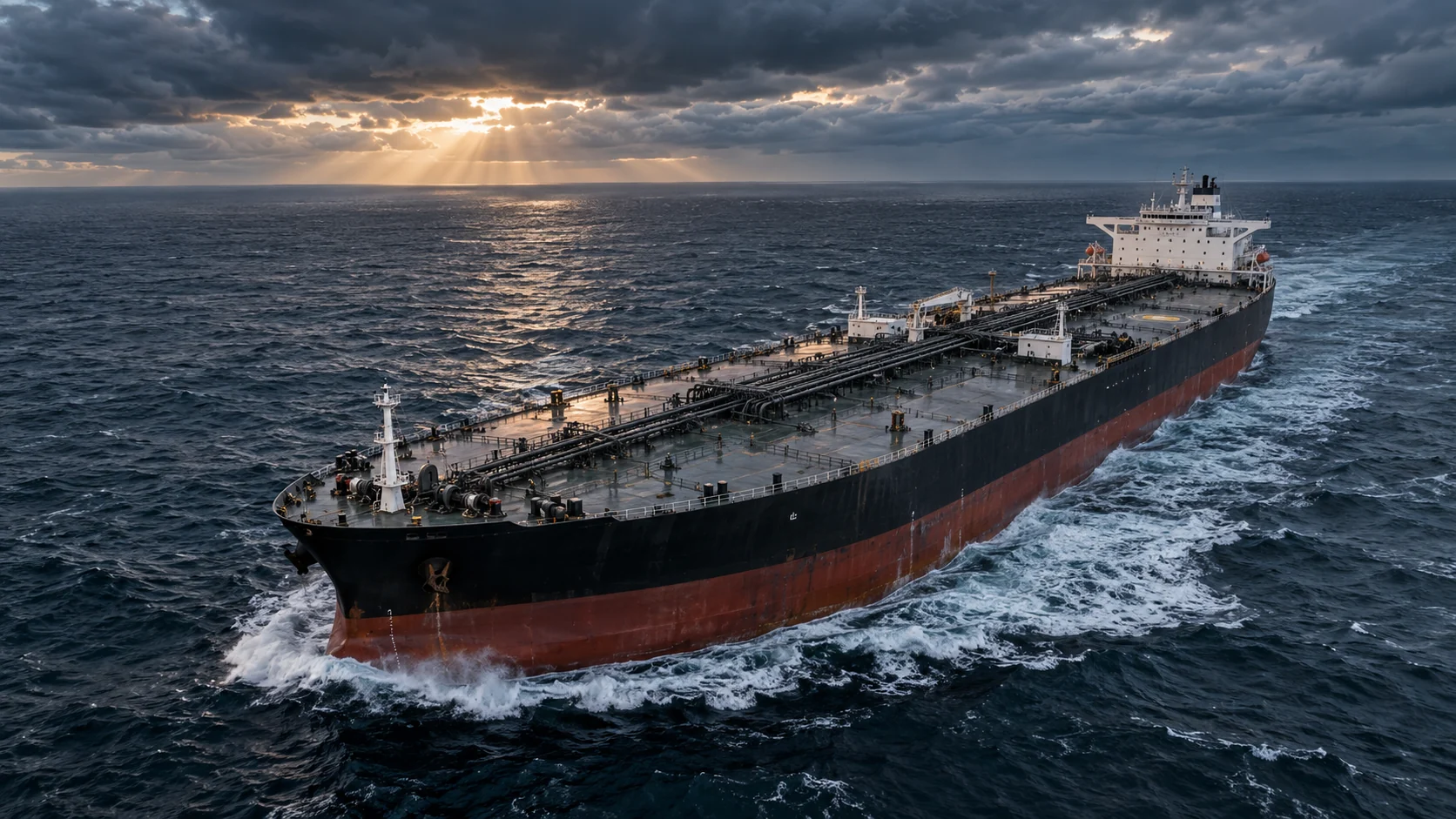
A casualty report identifies a shipment risk, not a universal insurance or freight charge.
Contship Jet sank after three sea drones struck it off Bulgaria on October 28. All 18 crew were rescued. The attacker has not been identified; this does not establish a general shipping surcharge.
The practical question is which part of your operation is actually exposed, which evidence supports that connection, and what assumptions belong in a separate cost comparison. The reporting below supplies context; your shipment details and contract terms determine the decision.
What happened?
Reuters reports that the Liberian-flagged, Greek-managed vessel carried 421 containers from Haifa toward Constanta. The attack occurred in Bulgaria’s exclusive economic zone, outside its territorial waters. The sinking was confirmed October 29. Hazardous cargo was reported; initial inspections found no visible pollution. These observations do not rule out later environmental findings.
The confirmed casualty is a new event, separate from earlier Black Sea incident reports. Responsibility, a confirmed cargo spill and a newly imposed freight surcharge should not be inferred from the location or the vessel’s destination.
Source-checked on 29 October 2026. Reported facts remain attributed; SCS operational analysis is separate. No general freight-rate change caused by this event has been established.
Who is exposed?
Cargo owners with a booking on the affected vessel need shipment-specific updates. Other Black Sea shippers have a conditional routing and insurance question, not a confirmed loss.
SCS analysis: start with shipment exposure, not the headline
First establish whether your booking was on the affected vessel or another service in the region. Record the bill of lading, container number, cargo description, insured value and last verified location. A regional news alert cannot determine whether an individual shipment is lost, delayed or unaffected.
Ask the carrier or forwarder for a written shipment-specific status and the next operational update. Preserve invoices, packing records and relevant messages. Notify the insurer or broker through the procedure in your policy; coverage, exclusions and notice requirements depend on the actual terms. This article is not a coverage determination.
Compare contingency costs on the same basis
For unaffected cargo, separate a proposed rerouting from a confirmed service change. Compare transport, additional handling, inventory delay and any quoted insurance adjustment together. Do not approve an expensive replacement route merely because it has a different port name.
If production depends on the shipment, identify the latest useful arrival date and qualified replacement stock. Avoid counting both a full lost-sales estimate and the cost of preventing that same loss as independent benefits.
Does the attack prove who was responsible?
No. The cited reporting does not identify the attacker.
Are all Black Sea shipments now delayed?
No such conclusion is established. Check the particular vessel, port and service notice.
Does hazardous cargo mean a spill is confirmed?
No. Treat cargo classification and environmental observations as separate facts.
What could this mean for my costs?
Use explicit assumptions for the same cost scope. No observed company margin, energy price or risk event is automatically applied to this arithmetic.
Keep the what-if separate from the news.
The fixed example and interactive calculator use fictional inputs. They do not assign a reported company result, future disruption or market percentage to your business. Replace an assumption only when you have a comparable quote or a clearly labeled scenario of your own.
Before comparing totals, match the period, currency and cost scope. Record any excluded handling, storage, inventory, taxes or service effects separately. A lower amount in this limited model is not a finding that the alternative is operationally feasible or that savings have already occurred.
A transparent cost sensitivity
| Entered comparison per 40-ft | Booking-set transport | Difference from $3,000 basis |
|---|---|---|
| $2,800 assumed comparison | $56,000 | −$4,000 |
| $3,000 assumed comparison | $60,000 | $0 |
| $3,200 assumed comparison | $64,000 | +$4,000 |
Fixed fictional arithmetic only. Cargo value, loss, coverage and actual port charges are not inferred.
What does a comparable cost scenario show? Your local shipping profile can supply compatible inputs. It does not prove the event affects your operation, and it never changes the source facts. Incompatible modes keep separate examples.
What should I watch?
- New dated operating or commercial evidence relevant to the reported event.
- Your actual supplier or carrier terms, including effective dates and exclusions.
- Shipment-level results rather than an assumed universal cost outcome.
Bring these questions to your next review.
- Confirm the vessel, container identifier and carrier’s written cargo status.
- Preserve shipment documents and follow the notice process in the actual insurance policy.
- Compare any alternative route against service needs and all quoted charges.
A casualty report identifies a shipment risk, not a universal insurance or freight charge. The useful next step is a documented comparison using your own operating evidence and service requirements.
What changed in this coverage?
Source checked: 29 Oct 2026. This is a recorded research snapshot, not continuous monitoring. Reporting, editorial updates and hypothetical assumptions are distinct.
- SCS analysis
Initial October 29 SCS analysis. Source, event and SCS publication dates are distinct. This is a dated report, not a live operational alert.
Source-deployed article in this reader collection. This record is not a D1 editorial approval or an automated daily intake receipt. Later owner-released corrections or retractions take precedence at this URL.
FOLLOW THE CONNECTED COVERAGE ↗Sources & provenance.
- Reuters: Contship Jet sinking ↗2026-10-29 · checked 29 October 2026 · Casualty, rescue, voyage and initial observations; responsibility remains unidentified.
- AP: sinking confirmation ↗2026-10-29 · checked 29 October 2026 · Independent confirmation of the sinking and rescued crew.
Article update. Initial October 29 SCS analysis. Source, event and SCS publication dates are distinct. This is a dated report, not a live operational alert.
Research edition: 29 Oct 2026 Pacific. First published: 29 Oct 2026. Last modified: 29 Oct 2026. Source periods and access limits appear above. Prepared at the site owner’s request. Source verification does not represent a separate human editorial review or an editorial-database approval. Reported figures are attributed to the source, not independently audited. External links open the original source; availability may vary.