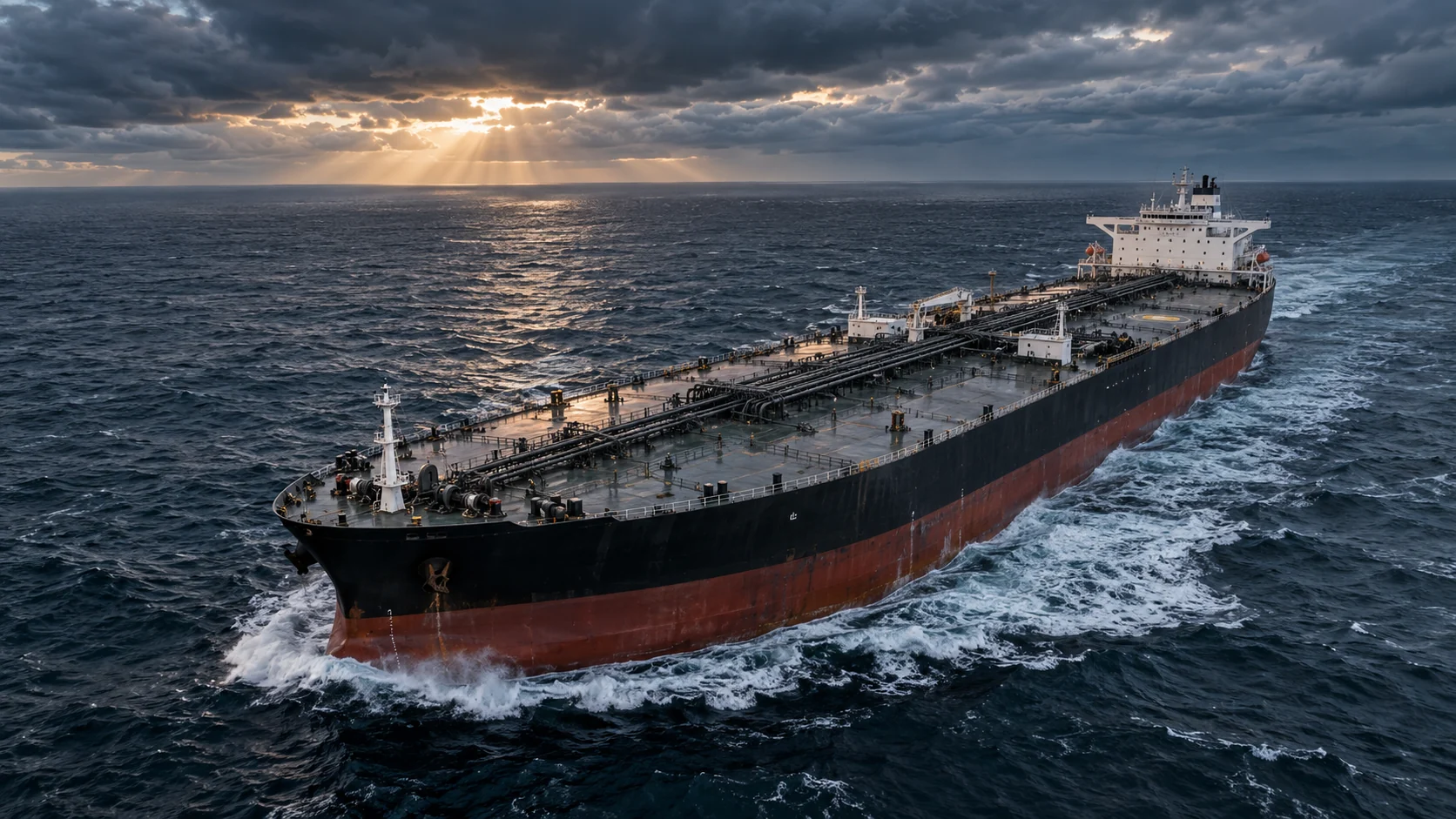
Nakilat says unidentified objects struck its LNG carrier on October 30. The company reported no crew injuries or environmental impact; shipment timing and cost effects still need separate evidence.
Nakilat says Al Mayeda was struck by unidentified objects while transiting the Gulf on October 30 and remained safe and operational. It reported no crew injuries or environmental impact. The statement does not identify an attacker or establish an incident-specific freight charge.
Use the reporting as a prompt for a shipment-specific review. The practical checks below are SCS analysis, not evidence that your own service, price or delivery commitment has changed.
What happened?
Nakilat’s company statement identifies the vessel as LNG carrier Al Mayeda and dates the incident to Friday evening, October 30, 2026.
The company reported no crew injuries or environmental impact and said the vessel was operational while the incident’s impact was being assessed.
Qatar News Agency reported the statement on November 1, citing its publication through the Qatar Stock Exchange. The incident date and this reporting date are different.
Sources checked 1 November 2026. Attribution and unresolved facts remain explicit; no shipment-specific rate effect is established.
Who is exposed?
Potential relevance depends on your actual cargo, contract, mode and timing. Company or regional activity alone does not establish an effect on your shipment.
SCS analysis: connect the named vessel to the actual contract.
Start by checking whether a contracted cargo is associated with this vessel and voyage. A regional security headline does not establish exposure for every energy buyer. Ask the contractual counterparty for a dated status update covering the relevant loading or discharge commitment. Keep the operational statement, cargo documentation and commercial notice together, but do not assume they answer the same question.
A vessel described as operational is not automatically a guarantee that every delivery milestone is unchanged. Conversely, an incident does not prove a cargo has been delayed or lost. Ask which milestones remain confirmed and which are still being assessed. Record the next expected update without turning a provisional estimate into an established arrival history.
Separate cargo availability, transport charges and energy prices.
Identify the price basis and delivery terms on the purchase agreement before changing a budget. An LNG cargo price, a transport charge and a downstream fuel invoice are different commercial measures. Do not insert a security headline into a calculator as a percentage shock. Any planning assumption should be explicitly chosen, labeled hypothetical and kept separate from reported facts.
If a counterparty proposes a revised charge, obtain its currency, quantity basis, validity and contractual payer. Check whether it replaces an existing charge or adds to it, and whether the same service and delivery terms still apply. Refer insurance and contractual interpretation to the responsible specialists. A general possibility of greater risk does not establish a payable premium on this cargo.
Use evidence-led contingency planning.
Consider alternatives only against a documented supply or delivery constraint. Confirm that an alternative supplier, receiving arrangement and delivery window can meet the actual requirement before treating it as available. Compare complete commercial terms, not an isolated headline price. Keep reversible preparation separate from commitments that create additional cost or duplicate capacity.
Send stakeholders a short update distinguishing the company’s account, the status of the particular cargo and the next confirmation required. Avoid transferring details from other vessel incidents, including attacker claims, damage descriptions or rescue counts. After execution, reconcile actual milestones and invoices with the approved plan so any cost variance has a documented explanation rather than an assumed link to regional news.
Was an attacker identified?
The reviewed company statement does not identify who was responsible. Do not infer an actor or weapon from other incidents.
Does operational mean delivery is guaranteed on time?
No. Confirm the specific cargo’s contractual milestones separately with the responsible counterparty.
Is this the RITI or Louise 1 incident?
No. This report concerns Al Mayeda. Details from the separately reported RITI rescue and Louise 1 attack are not transferred.
What could this mean for my costs?
Reported operating activity and policy are not your invoice. Obtain dated commercial terms before changing a transport budget.
A separate planning sensitivity—not a news-derived bill
Fictional set of 20 forty-foot containers at an assumed USD 3,000 per-container reference. The comparison is not a rate caused by the reported event.
Replace the illustrative amounts only with your own comparable inputs. Keep currency, period, units and service scope consistent. The model does not establish actual capacity, schedule feasibility, coverage or savings.
This separate container-count example is not an LNG-carrier or bulk-grain freight model. Do not convert the reported cargo or vessel into containers; use it only for an independently defined containerized movement, or obtain a cargo-specific commercial quote instead.
A transparent cost sensitivity
| Entered comparison per 40-ft | Booking-set transport | Difference from $3,000 basis |
|---|---|---|
| $2,800 assumed comparison | $56,000 | −$4,000 |
| $3,000 assumed comparison | $60,000 | $0 |
| $3,200 assumed comparison | $64,000 | +$4,000 |
Fixed fictional arithmetic only. Cargo value, loss, coverage and actual port charges are not inferred.
What should your cost review separate? Your local shipping profile can supply compatible inputs. It does not prove the event affects your operation, and it never changes the source facts. Incompatible modes keep separate examples.
What should I watch?
- Confirm whether the named vessel and voyage are connected to your contracted cargo.
- Obtain dated delivery-status and charge notices from the responsible counterparty.
- Compare feasible alternatives only against a documented constraint and equivalent commercial terms.
Bring these questions to your next review.
- Confirm whether the named vessel and voyage are connected to your contracted cargo.
- Obtain dated delivery-status and charge notices from the responsible counterparty.
- Compare feasible alternatives only against a documented constraint and equivalent commercial terms.
Confirm whether the named vessel and voyage are connected to your contracted cargo.
What changed in this coverage?
Source checked: 01 Nov 2026. This is a recorded research snapshot, not continuous monitoring. Reporting, editorial updates and hypothetical assumptions are distinct.
- Original SCS coverage
First SCS article. Source dates and reporting status are distinct from publication and hypothetical planning assumptions.
Source-deployed article in this reader collection. This record is not a D1 editorial approval or an automated daily intake receipt. Later owner-released corrections or retractions take precedence at this URL.
FOLLOW THE CONNECTED COVERAGE ↗Sources & provenance.
- Nakilat: Al Mayeda vessel incident statement ↗Page displays 30 October 2026; checked 1 November 2026 · Company-attributed October 30 incident and crew, environmental and operational status. Exact primary publication time is not asserted.
- Qatar News Agency: Nakilat statement reported November 1 ↗Reported and checked 1 November 2026 · November 1 reporting of the company statement through the Qatar Stock Exchange; distinct from the incident date.
Article update. First SCS publication on 1 November 2026; source facts and conditional shipper analysis are separated.
Research edition: 01 Nov 2026 Pacific. First published: 01 Nov 2026. Last modified: 01 Nov 2026. Source periods and access limits appear above. Prepared at the site owner’s request. Source verification is not a separate human editorial review or a D1 editorial approval. Reported figures are attributed to the source, not independently audited. External links open the original source; availability may vary.