Verify vessel status and contractual exposure before converting a security incident into a shipment-cost assumption.
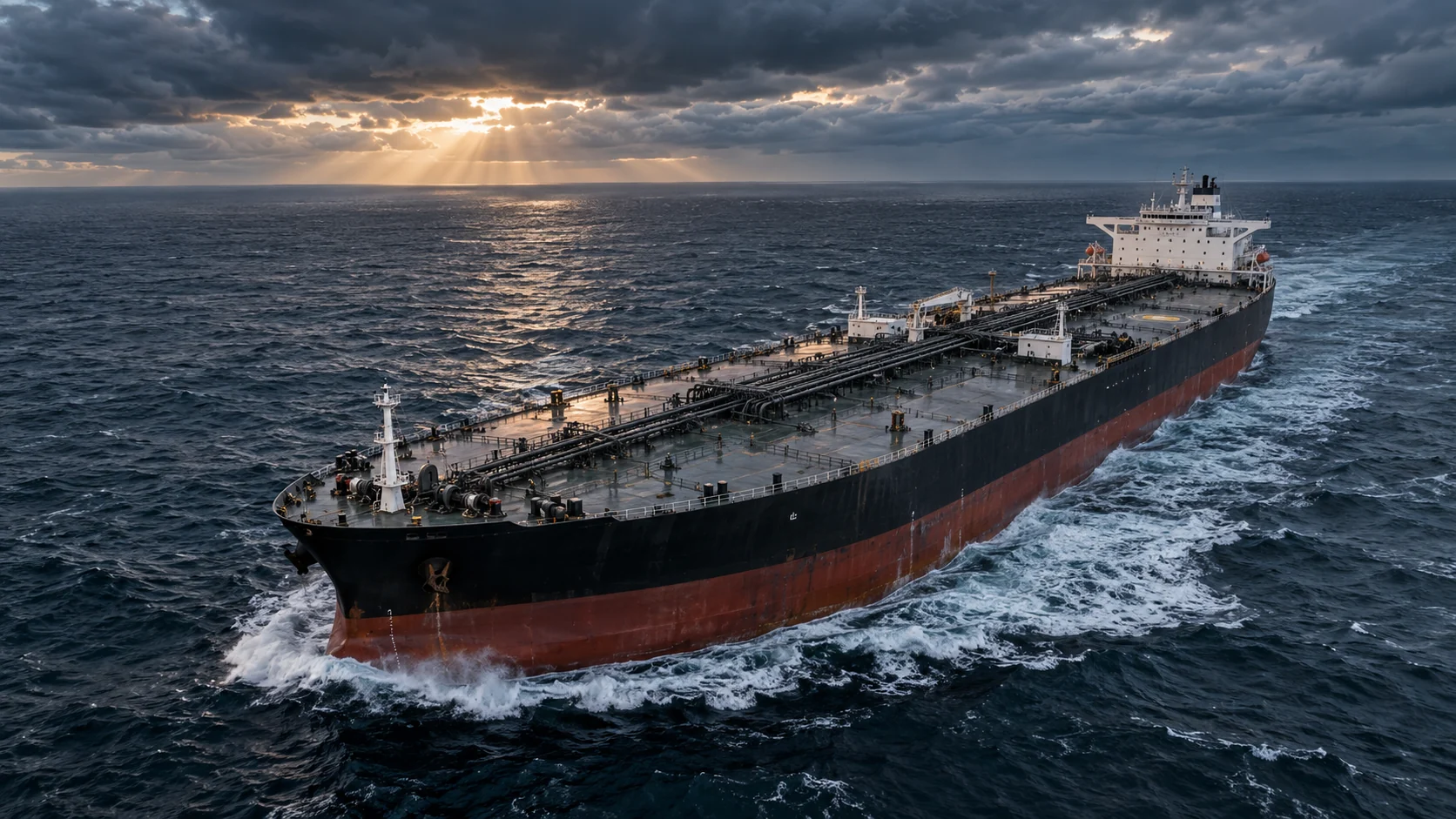
A tanker continued its voyage after an October 29 explosives attack near Khasab in the Strait of Hormuz, according to Reuters reporting of UKMTO information. The crew was safe and the fire was extinguished. This establishes an incident and an operational update—not a new freight surcharge or a closure of the strait.
Security events can create several separate decisions: whether a voyage can proceed, whether an insurer requires new terms and whether a delivery plan needs a contingency. Treat each as its own evidence question. A dramatic event alone cannot supply the price, delay or contractual cost for another cargo.
What happened?
Reuters reported that two explosives attached to a tanker’s hull caused an engine-room fire about 25 nautical miles northeast of Khasab, Oman. UKMTO said the crew was safe, no environmental impact was reported and the vessel continued its voyage after the fire was extinguished. Responsibility was not established.
Splash identified the tanker as the Panama-flagged Louise 1, attributing that identification to maritime security firm VanguardTech. The UKMTO account carried by Reuters did not identify the vessel; these are distinct source scopes.
No incident-specific new freight rate, insurance premium or customer surcharge was verified in the sources reviewed. A resumed voyage does not establish that all risk has ended or that every shipment in the region is unaffected.
Sources checked 30 October 2026. Attributed reporting and company disclosures are distinguished from SCS analysis. No universal carrier-rate change is inferred.
Who is exposed?
Cargo on the affected voyage, other regional voyages and indirect fuel exposure require different evidence. Verify your actual shipment before assuming a delay or charge.
Start with the actual voyage, not a regional assumption.
Ask the carrier or operator for a dated status covering the vessel, relevant transit and expected next milestone. Check whether the cargo you manage is on that voyage, on another voyage through the area or only indirectly exposed through fuel markets. Those are different decisions.
Keep planned arrival, confirmed movement and any documented delay separate. If a logistics partner changes an estimate, retain the timestamp and reason. Do not assume a reported temporary loss of propulsion means a specific number of days has been added to every delivery.
Ask who bears each additional cost.
Review the relevant transport and insurance terms with the responsible specialists. A security precaution, rerouting request or premium adjustment may be allocated differently from ordinary freight. Obtain a written quote or notice before placing a number in your budget.
For an alternative route, check operational feasibility as well as price: available vessel space, discharge options, onward connections and cargo requirements. A paper comparison is not useful if the cargo cannot be redirected or the substitute fails the delivery requirement.
Was the tanker identified as Louise 1?
Splash reported that identification citing VanguardTech. The UKMTO account carried by Reuters did not name the vessel.
Did this report confirm the Strait of Hormuz was closed?
No. The cited incident report says the affected vessel continued its voyage; it does not establish a strait-wide closure.
Did the attack cause a verified new freight surcharge?
No incident-specific freight surcharge was established in the sources reviewed. Obtain the applicable written carrier or insurer notice.
What could this mean for my costs?
Verify vessel status and contractual exposure before converting a security incident into a shipment-cost assumption.
Use a delay scenario without inventing an actual delay.
The example below assumes a fictional 20,000-tonne cargo and $15,000 of incremental cost per day. One, three and seven assumed extra days produce $15,000, $45,000 and $105,000—equivalent to $0.75, $2.25 and $5.25 per tonne. None is a reported cost or delay for Louise 1.
Use only incremental costs contractually allocated to your operation. Check for overlap between vessel hire, demurrage, storage and inventory carrying costs. Leave unsupported inputs blank in your actual decision record rather than filling them with an incident headline.
A transparent cost sensitivity
| Hypothetical delay | Entered incremental cost | Per metric tonne |
|---|---|---|
| 1 assumed extra day | $15,000 | $0.75 / tonne |
| 3 assumed extra days | $45,000 | $2.25 / tonne |
| 7 assumed extra days | $105,000 | $5.25 / tonne |
Illustrative shipment inputs and conditional eligibility only. Not a live quote, universal invoice adjustment, tax determination or forecast.
What should your cost review separate? Your local shipping profile can supply compatible inputs. It does not prove the event affects your operation, and it never changes the source facts. Incompatible modes keep separate examples.
What should I watch?
- Dated operator and UKMTO updates relevant to the actual transit.
- Written routing or insurance changes and the party responsible for them.
- Confirmed delivery milestones rather than assumed regional delays.
Bring these questions to your next review.
- Map your cargo to the actual voyage and relevant transit.
- Request a timestamped operator status and revised milestone if any.
- Separate freight, insurance, delay and inventory cost evidence.
- Verify feasible alternatives before approving a route change.
The reported crew-safety and resumed-voyage update matters. It does not establish a universal shipping-cost increase or remove the need for voyage-level checks. Keep the source, timestamp and contractual allocation with every cost decision.
What changed in this coverage?
Source checked: 30 Oct 2026. This is a recorded research snapshot, not continuous monitoring. Reporting, editorial updates and hypothetical assumptions are distinct.
- SCS analysis
Initial October 30 SCS source-checked analysis. Reporting, operational implications and hypothetical costs remain separate.
Source-deployed article in this reader collection. This record is not a D1 editorial approval or an automated daily intake receipt. Later owner-released corrections or retractions take precedence at this URL.
FOLLOW THE CONNECTED COVERAGE ↗Sources & provenance.
- Reuters via Devdiscourse: UKMTO tanker incident report ↗Checked 30 October 2026 · Unnamed vessel, location, fire, crew safety and resumed voyage.
- Splash: tanker identified through VanguardTech ↗Checked 30 October 2026 · Vessel identity is attributed to VanguardTech, not to Reuters or UKMTO.
Article update. Initial October 30 SCS source-checked analysis. Reporting, operational implications and hypothetical costs remain separate.
Research edition: 30 Oct 2026 Pacific. First published: 30 Oct 2026. Last modified: 30 Oct 2026. Source periods and access limits appear above. Research-checked and source-deployed at the owner’s request. A separate human editorial review has not been recorded. This is not an automated publishing or D1 approval receipt. Reported figures are attributed to the source, not independently audited. External links open the original source; availability may vary.